
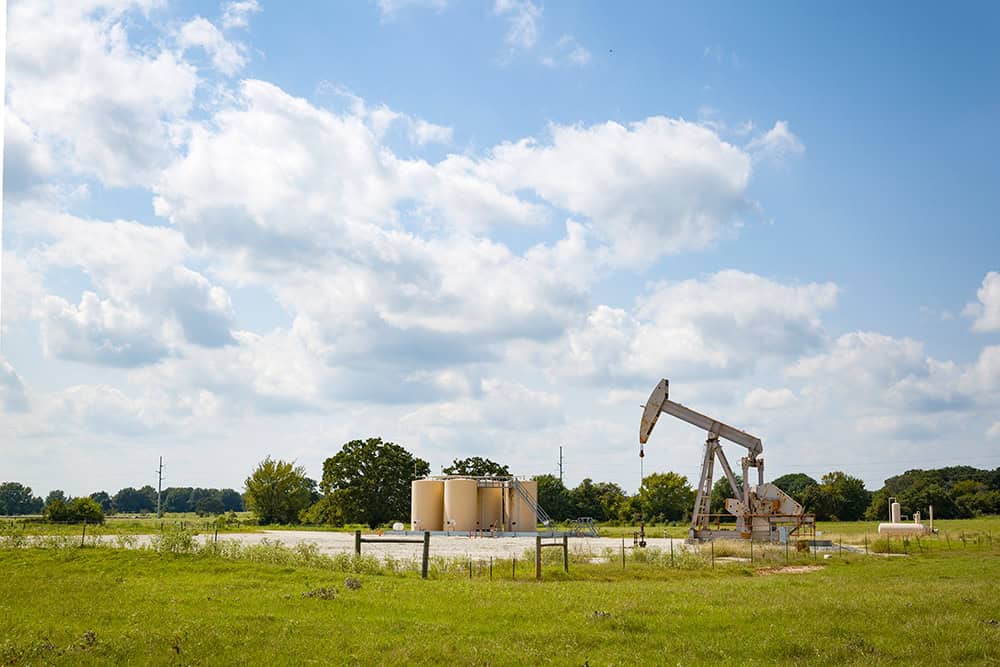
Preparing for the Texas Voluntary Marginal Conventional Well Plugging Program
Texas operators carry the cost of plugging low-producing wells on their own balance sheets. A federally funded state program may help offset that cost for eligible wells for a limited time, and only for operators who can document what they plug and what it stops emitting.
The Texas Voluntary Marginal Conventional Well Plugging Program (TxMCW) is a voluntary grant program administered by the Texas Commission on Environmental Quality (TCEQ). It draws on $134.1 million awarded to Texas under the Inflation Reduction Act’s Methane Emissions Reduction Program (MERP), overseen by the U.S. Department of Energy (DOE). The objective is direct: reduce methane and other air emissions by permanently plugging and abandoning marginal conventional wells across the state.
The program is still under development. TCEQ has published program information and planning materials, but has not yet opened applications. For operators with aging conventional wells, that combination of high planning value and a finite timeline is exactly when preparation pays off.
Defining Eligible Wells
The program is limited to a specific category of well. Eligible wells are marginal conventional wells located on non-federal lands that produce low volumes. The general thresholds are:
- 15 barrels of oil equivalent (BOE) per day or less, or
- 90 thousand cubic feet (Mcf) of natural gas per day or less.
Two exclusions matter. Unconventional wells are not eligible. Neither are abandoned or orphaned wells, which Texas addresses through separate Railroad Commission plugging programs. TxMCW is built for active, low-producing wells still under an operator’s control.
Reducing More Than Methane
Methane is the program’s headline target, but a plugged marginal well stops more than that. Marginal wells and their production equipment can release volatile organic compounds (VOCs) and hazardous air pollutants (HAPs), including benzene, toluene, ethylbenzene, and xylene (BTEX), and in some cases hydrogen sulfide. Permanent plugging also reduces the risk of subsurface leakage, where oil, salt, and other minerals can migrate into aquifers that supply cities, farms, and ranches. For an operator, one action addresses air, groundwater, and long-term liability at the same time.
Prioritizing Wells for Funding
Funding is finite, so TCEQ is expected to prioritize candidate wells rather than rely solely on a first-come, first-served structure. The published Well Prioritization Plan weights criteria that include:
- Measured or screened methane emissions
- Production rates
- Potential environmental and human health impacts
- Operator well inventories
Weighted scoring produces a ranked list of recommended candidates. The DOE has developed a free, open-source software and decision support system called PRIMO that can help organizations to determine best candidate wells for plugging using MERP funding.
Measuring Methane Before and After
Participation carries a measurement obligation. Operators who accept funding agree to methane measurement both before and after each well is plugged. Initial screening may rely on qualitative methods such as optical gas imaging (OGI), but detected emissions may require quantitative measurement consistent with DOE methane measurement guidance, such as high-flow samplers or quantitative OGI (QOGI). The program also contemplates environmental restoration of plugged sites and verification that a well is no longer emitting. The practical effect: documentation, not just the plug itself, determines whether the work satisfies the program.
Working Within a Fixed Window
TxMCW remains officially under development. TCEQ has not published an application schedule but the first application round is expected to open in mid-to-late 2026.The constraint that should drive planning is the end date. Regardless of when applications open, the program rests on a five-year federal funding window and is expected to sunset in December 2028. The interval between “applications open” and “funding expires” is short. Operators who wait for a published schedule before assessing their well inventory will compress their own runway.
Interested operators can sign up for program updates through the TCEQ website at tceq.texas.gov/airquality/txmcw.
How EDGE Supports TxMCW Participation
EDGE Engineering & Science helps operators move from interest to a defensible, fundable submission. When the program opens, EDGE can provide:
- Methane measurement protocols, QA/QC procedures, and defensible documentation systems consistent with DOE and TCEQ expectations
- Pre- and post-plugging emissions screening using OGI, with quantification by QOGI or high-flow samplers where required
- Technical documentation and support for grant applications and methane reduction benefit evaluations
- Regulatory and compliance support for plugging activities, including coordination with TCEQ and the Texas Railroad Commission
- Technical program management
Many of these wells will need plugging whether or not the funding is captured. TxMCW offers a defined window to complete that work with federal funding support rather than relying solely on operating budget, provided the measurement and documentation meet program expectations.
For #FurtherInsight on the TxMCW program and how to position your well inventory before applications open, contact EDGE Engineering & Science.

