
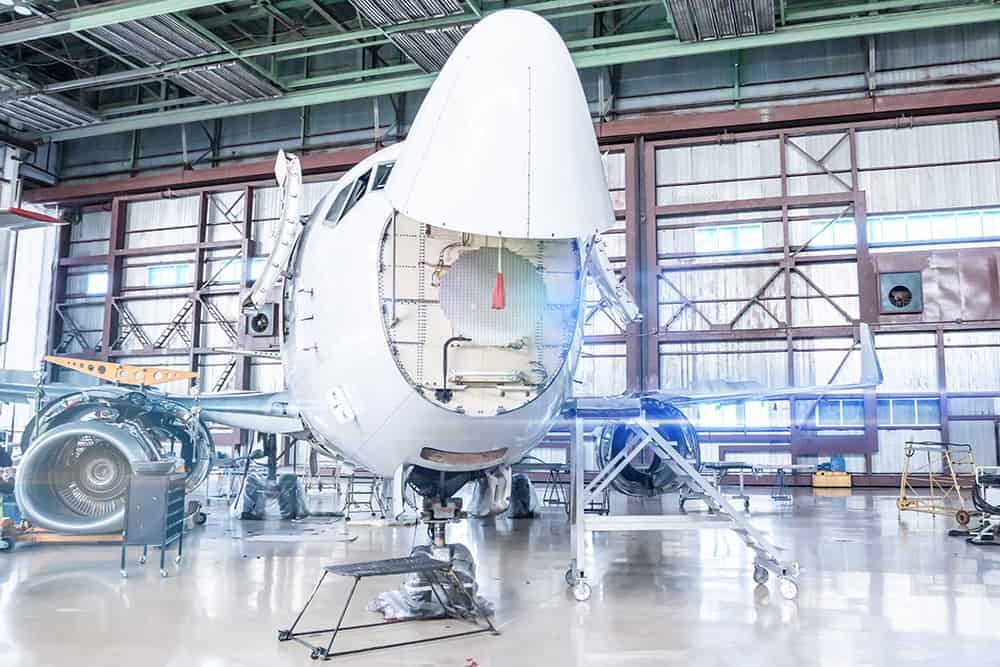
Aerospace manufacturing and other large manufacturing and chemical facilities face unique environmental risks due to their complex processes and long operational histories. Managing these risks requires innovative strategies that address both regulatory demands and stakeholder concerns. This article explores how EDGE’s approach enabled an aeronautical facility with decades of manufacturing activities to effectively manage environmental liabilities arising from leakages from aged industrial sewer lines. EDGE’s risk-based approach safeguards sensitive natural resources and fosters positive relationships among regulators and community partners. Through targeted interventions and forward-thinking risk assessment and management, EDGE demonstrates how environmental stewardship and operational excellence can go hand in hand in the aerospace sector.
The subject aeronautical facility covers over 210 acres and has over 70 years of manufacturing history. Activities include fabrication of aluminum, titanium, composite structures, and other air frame materials. The manufacturing processes also include metal cutting, metal forming and grinding, painting, chemical processing, priming, and degreasing. The facility has dedicated industrial wastewater treatment plant (IWTP).
The industrial sewer line (ISL) within the facility is over 2.7 miles long with 57 manholes. Over the years, the ISL was compromised at several locations due to root intrusion, structural damage, or normal movement of soil beneath the ISL and manholes. Wastewater including hexavalent chromium leaked at the compromised locations causing potential adverse impacts to the groundwater and a very sensitive stream that abuts the property.
EDGE helped the facility manage liabilities related to the compromised ISL and chemical release by implementing several activities over a three-year period. These include (i) development of risk-based model to prioritize the investigation of compromised locations, (ii) installation of over 40 soil boring and monitoring wells around compromised locations, (iii) injection of calcium polysulfide in multiple mobilizations, (iv) risk evaluation to develop endpoints for groundwater and stream protection, and (v) communication with regulators. As part of this project EDGE helped our client develop a very positive relationship with various internal and external stakeholders.
At this and numerous other sites, the EDGE team has demonstrated success in cost effectively managing environmental liabilities at the contaminated sites and building positive relationships between various stakeholders having diverse objectives. If you have any current or potential future liabilities related to contaminated sites, please contact our team, Deepankar Vaidya and Atul Salhotra.

