
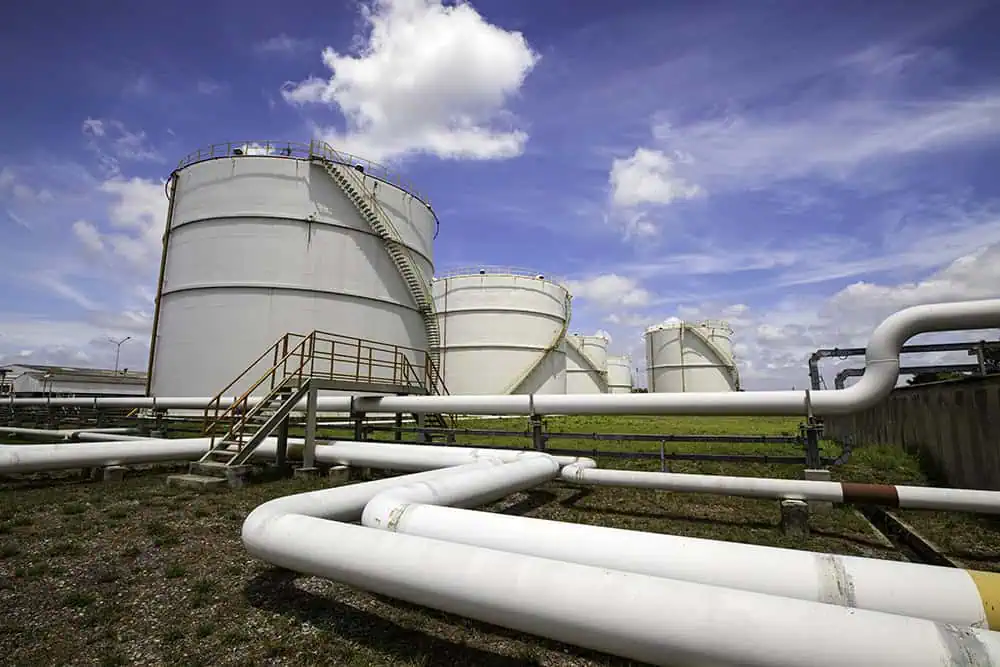
Is Your Storage Tank DOT/PHMSA Regulated?
Storage tanks are common throughout oil and gas production, midstream operations, terminals, refineries, and industrial facilities. But the presence of crude oil, condensate, diesel, ammonia, or another hazardous liquid does not automatically make a stationary tank subject to U.S. Department of Transportation (DOT) or Pipeline and Hazardous Materials Safety Administration (PHMSA) requirements.
For PHMSA purposes, the more important question is:
What role does the tank play in the transportation of hazardous liquid by pipeline?
When Does a Tank Become a PHMSA “Breakout Tank”?
Under 49 CFR § 195.2, a breakout tank is a tank used to:
- Relieve surges in a hazardous-liquid pipeline system; or
- Receive and store hazardous liquid transported by pipeline for reinjection and continued transportation by pipeline
Tank size, tank name, and physical location alone do not determine whether a tank is regulated. PHMSA looks at how material actually moves through the facility and how the tank functions within the transportation system.
A tank may meet the breakout-tank definition when hazardous liquid enters from a regulated pipeline, is temporarily stored, and is later returned to a pipeline for continued transportation. PHMSA has also indicated that temporary or occasional reinjection can be significant.
A different result may apply when hazardous liquid is delivered to a tank by pipeline but later leaves by truck, rail, or vessel. If pipeline transportation terminates at the tank and the tank is not otherwise used for reinjection or surge relief, that operating scenario generally does not satisfy the breakout-tank definition.
PHMSA confirmed this distinction in a July 28, 2025, interpretation involving a terminal tank that receives anhydrous ammonia by pipeline. PHMSA concluded that when the product left the tank by marine vessel, pipeline transportation stopped at the tank. However, when material received by pipeline was later returned to a pipeline, the tank was being used as breakout tankage.
The same tank may therefore require different regulatory analysis depending on how it is actually operated.
What About Production-Facility Tanks?
Tanks located at upstream oil and gas facilities are not automatically regulated under 49 CFR Part 195.
Section 195.1 includes exclusions for certain transportation through onshore production facilities, including flowlines and associated storage systems. However, determining whether a particular tank falls within that exclusion requires more than simply labeling it a “production tank.”
The analysis should consider:
- What material is stored
- How material enters and exits the tank
- Whether connected piping is production, gathering, transmission, or another regulated pipeline
- Where the production-facility boundary is located
- Whether the tank performs a pipeline transportation function
- Whether any operating scenario involves receipt from a pipeline followed by reinjection into a pipeline
Facility changes can also affect the analysis. Asset acquisitions, new pipeline connections, changes in flow direction, terminal expansions, and operational reconfigurations may change the regulatory status of a tank.
“DOT Tank” and PHMSA Breakout Tank Are Not the Same Thing
The phrase “DOT tank” is often used informally, but DOT hazardous-material transportation regulations and PHMSA pipeline regulations address different activities.
A conventional stationary aboveground storage tank does not become a DOT cargo tank simply because it contains a hazardous material. DOT Hazardous Materials Regulations under 49 CFR Parts 171-180 generally apply to transportation containers such as cargo tanks, portable tanks, tank cars, intermediate bulk containers, and other hazardous-material packaging used in transportation in commerce.
A stationary tank associated with a pipeline system should therefore be evaluated separately under the Part 195 applicability and breakout-tank provisions.
Five Questions to Ask About Every Tank
When evaluating potential PHMSA applicability, operators should be able to answer:
- What material does the tank contain?
- How does material enter the tank?
- How does material leave the tank?
- Does material received by pipeline ever return to a pipeline for continued transportation?
- Does the tank provide surge relief or another operational function for a hazardous-liquid pipeline system?
Non-routine operations should also be considered. Startup, commissioning, maintenance, temporary rerouting, and contingency operations may reveal pipeline movements that are not obvious during normal operations.
Why the Classification Matters
If a tank qualifies as a regulated breakout tank, specific requirements under 49 CFR Part 195 may apply to areas such as design and construction, repair, pressure testing, overfill protection, corrosion control, in-service inspection, and operations and maintenance.
PHMSA has also proposed updates to certain breakout-tank inspection requirements, including the edition of API Standard 653 incorporated into the regulations and provisions addressing risk-based inspection intervals. As of August 2026, those changes remain proposed and are not yet final requirements.
When Was Your Last Applicability Review?
Tank and pipeline classifications should be revisited when facilities are acquired, modified, expanded, or operated differently than originally designed.
A defensible applicability review should evaluate actual material flow, pipeline status, operating configurations, facility boundaries, process diagrams, P&IDs, equipment inventories, and relevant operating procedures.
EDGE Engineering & Science can assist facility and pipeline operators with DOT/PHMSA applicability reviews, asset evaluations, regulatory gap assessments, and compliance program development for existing and newly acquired operations. Contact EDGE to discuss a DOT/PHMSA applicability review for your tanks.
Regulatory References: 49 CFR § 195.1; 49 CFR § 195.2; 49 CFR Parts 171-180; PHMSA Interpretation PI-24-0009, July 28, 2025; and PHMSA’s 2026 proposed rule addressing breakout-tank inspection requirements.

